Featured
Selling You an AI Agent Is Easier Than Solving Your Problem
Open-ended agents leave the customer to work out how AI should fit into the business.
Read the article
Lessons learnt from building AI systems around real business problems.
Operating problems often surface where important work becomes difficult to follow or control. Solving them starts with understanding how the work happens today, then deciding what needs to change, and whether software or AI has a useful role.
Turn free-form customer messages and attachments into validated operational records without forcing customers into a new channel.
Read incoming documents, structure the information, validate it against business rules, and send uncertainty to the right person.
Give controlled AI workflows access to ERP, CRM, databases, documents, and internal tools with explicit permissions.
Preserve source authority and context across documents, decisions, and systems so people and AI can work from traceable evidence.
Assemble evidence, apply deterministic checks, route material exceptions, and retain human authority for consequential decisions.
Where to start
Knowing AI is important does not tell you where it will improve the business. That requires a close understanding of the operation and the technical judgment to shape the right system around it.
Identify the AI opportunities that justify investment and define a practical route to implementation.
AI consulting & strategyCreate purpose-built software when the work does not fit a generic product or standalone AI tool.
Custom AI developmentGive AI controlled access to the systems and information it needs to take part in real work.
AI systems integrationIndustries
A task cannot be understood in isolation. The surrounding operation determines what the system needs to account for and where judgement still matters.

Orders depend on customer language, product knowledge, stock distinctions and the judgement used to resolve exceptions.
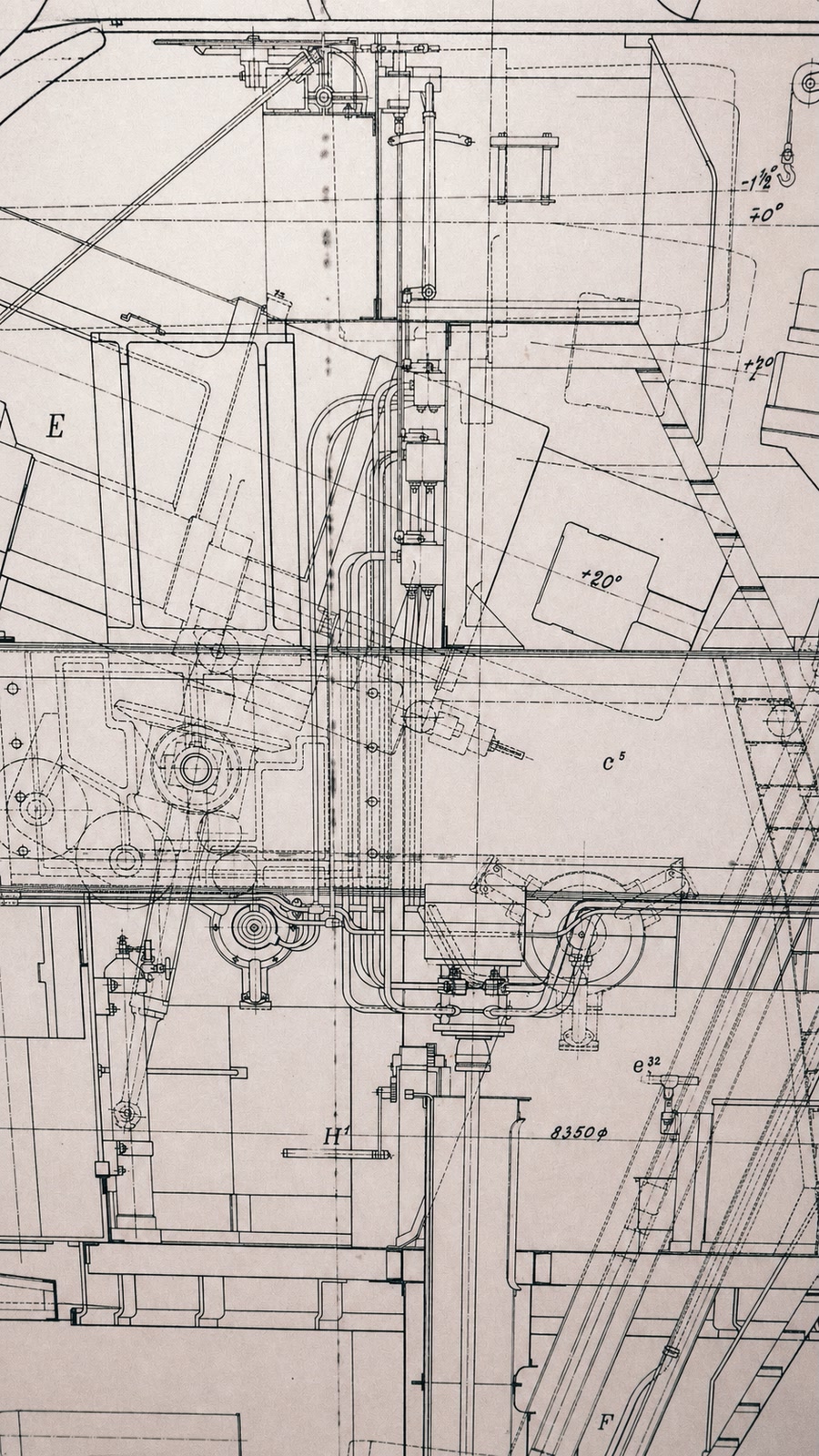
Drawings and calculations are connected outputs of decisions about requirements, physical constraints, standards and buildability.

Production planning depends on the part being made, the operations it requires and the real capabilities of each work centre.

Administrative work becomes difficult when documents arrive without context, records disagree and approval rules depend on the circumstances.
A useful system must remain understandable after the engagement ends. Its role in the operation, its limits and the responsibilities around it should be clear to the people running it.

Designed around actual cases, rules and exceptions—not an idealised version of the process.
The system makes clear where it can act and where a person needs to decide.
The business can maintain and improve the system without remaining dependent on the people who built it.
Integration
Most operations rely on systems introduced at different times. A new system has to fit that environment, with access and responsibility designed into the integration rather than dealt with after launch.
Business systems
 SAP
SAP Salesforce
 Oracle Fusion
 Microsoft Dynamics 365
Data
 Snowflake
 PostgreSQL
Cloud service provider
 AWS
AWS Google Cloud
 Microsoft AzureOracle Cloud
AI providers
 OpenAI
 Anthropic
 Gemini
 Moonshot
 Z.AI
Z.AIExamples of platforms we work across.
Some operating problems need a closer look before it is clear whether software or AI will help.
Contact Mesograde